Key Person and WP6 Leader
Research profile
37
ISI journal articles
17
H-index (Scopus)
1,100+
Scopus citations, excluding self-citations
2
patents
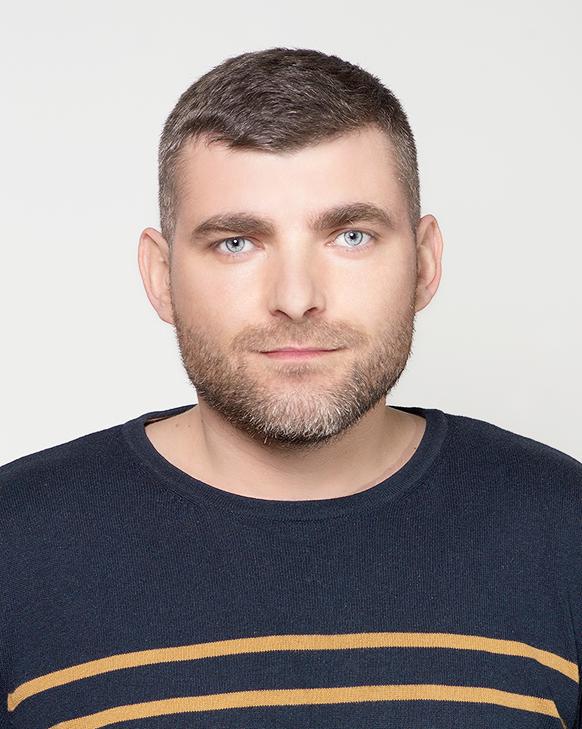
George Bârjoveanu is an Associate Professor at “Gheorghe Asachi” Technical University of Iași (TUIASI), a key member of the coordinating CERSUS team and leader of WP6 — Sustainability Assessment. His research focuses on life cycle assessment, environmental performance evaluation and environmental management, connecting the development of technologies and materials with evidence on their sustainability.
His expertise combines environmental assessment with water and wastewater treatment, process modelling and resource management. Within CERSUS, he coordinates the integration of life cycle thinking, eco-design and sustainability assessment across the consortium’s research on innovative materials, advanced treatment processes and by-product and waste valorisation.
Research and academic background
He graduated from TUIASI in 2004 with a degree in Chemical Engineering, specialising in Technologies and Biotechnologies for Environmental Protection. He completed a master’s degree in Environmental Management in 2005 and obtained his PhD in Chemical Engineering in 2009.
His doctoral research investigated advanced wastewater treatment by ultrafiltration for industrial water recirculation. During 2010–2013, he undertook postdoctoral research at TUIASI within the PERFORM-ERA programme, developing his research in environmental management.
His subsequent work has focused on using life cycle assessment to evaluate and predict the environmental performance of complex systems, technologies, products and innovative materials. This approach connects experimental findings with comparative assessment, process improvement and informed environmental decision-making.
His principal research areas include:
- Life cycle assessment: evaluation of environmental impacts across the life cycles of products, services, materials and technologies.
- Sustainability assessment and eco-design: integration of environmental evidence into the development and improvement of processes and resource valorisation pathways.
- Environmental management: application of assessment tools and performance indicators to support sustainable production and consumption.
- Water and wastewater treatment: conventional and advanced processes, membrane technologies and industrial water reuse.
- Environmental process modelling: analysis, simulation and optimisation of environmental systems, supported by statistical analysis and laboratory data.
- Life cycle assessment
- Sustainability assessment
- Eco-design
- Environmental management
- Water reuse
- Process modelling
Leading research and collaboration
His professional experience at TUIASI combines teaching, research, project management and collaboration with external organisations. He held engineering appointments supporting environmental education and research, undertook doctoral and postdoctoral research, and subsequently progressed through Lecturer and Associate Professor positions.
Within SUSTENVPRO, he coordinated the component project dedicated to assessing the sustainability of water treatment and waste valorisation processes through life cycle assessment. He also served as TUIASI partner coordinator for the Chicken Waste project on integrated chicken manure management and directed an industrial research contract addressing wastewater treatment plant efficiency for DELPHI DIESEL SYSTEMS ROMÂNIA.
His recent international activities include sustainability training within TEACH4SD, expertise in technology transfer, innovation and sustainability assessment within Digital Innovation Zone, and contributions to WARM, an Erasmus+ project supporting waste reduction, waste management and circular economy in Western Africa.
Since 2013, he has contributed to TUIASI’s Laboratory for Analysis and Control of Environmental Factors (LACMED), with responsibilities in laboratory analysis, quality assurance of results, statistical analysis and reporting. His research and consultancy experience connects environmental assessment with practical needs in industry and environmental services.
His scientific contributions include journal articles, two monographs, three book chapters and two patents. He also reviews research for journals including the Journal of Cleaner Production, The International Journal of Life Cycle Assessment and Sustainable Production and Consumption, and contributes to the organisation of the International Conference on Environmental Engineering and Management (ICEEM).
Training the next generation of researchers
His teaching connects environmental engineering principles with the tools needed to assess and improve environmental performance. His teaching portfolio includes environmental process modelling and simulation, life cycle assessment and sustainable consumption at bachelor’s and master’s levels.
As coordinator of the Environmental Management master’s programme and an initiator of the Eco-design and Sustainable Technologies bachelor’s programme, he contributes to the development of education linking technical knowledge with sustainability and environmental decision-making. He supervises master’s dissertations and participates in doctoral guidance committees.
Within CERSUS, he supports training in eco-design, life cycle assessment and life cycle management, helping young researchers connect experimental data with environmental evaluation. This work encourages life cycle thinking across disciplines and supports the consistent collection and interpretation of data throughout the consortium.
Role in CERSUS
As WP6 leader and a key member of the coordinating TUIASI team, George Bârjoveanu coordinates the sustainability assessment of innovative materials, advanced environmental processes and by-product and waste valorisation pathways developed within CERSUS.
WP6 uses life cycle thinking as a common framework linking the project’s research activities. Its initial work integrates eco-design, prospective life cycle assessment and life cycle costing to compare development options, identify potential environmental and economic trade-offs, and support decisions on materials, energy use, process integration and end-of-life management.
As experimental results become available, the assessment draws on data generated in WP2, WP3 and WP5 to evaluate materials, treatment technologies and resource valorisation routes. This work combines life cycle inventories, process modelling and scale-up scenarios with techno-economic and multicriteria assessment to support the comparison and improvement of proposed solutions.
In cooperation with WP4, WP6 also connects toxicity evidence with risk assessment and the development or updating of life cycle impact assessment characterisation factors. Through coordination of data collection, assessment methods and researcher training, he helps the consortium translate laboratory findings into evidence supporting sustainable technology development.