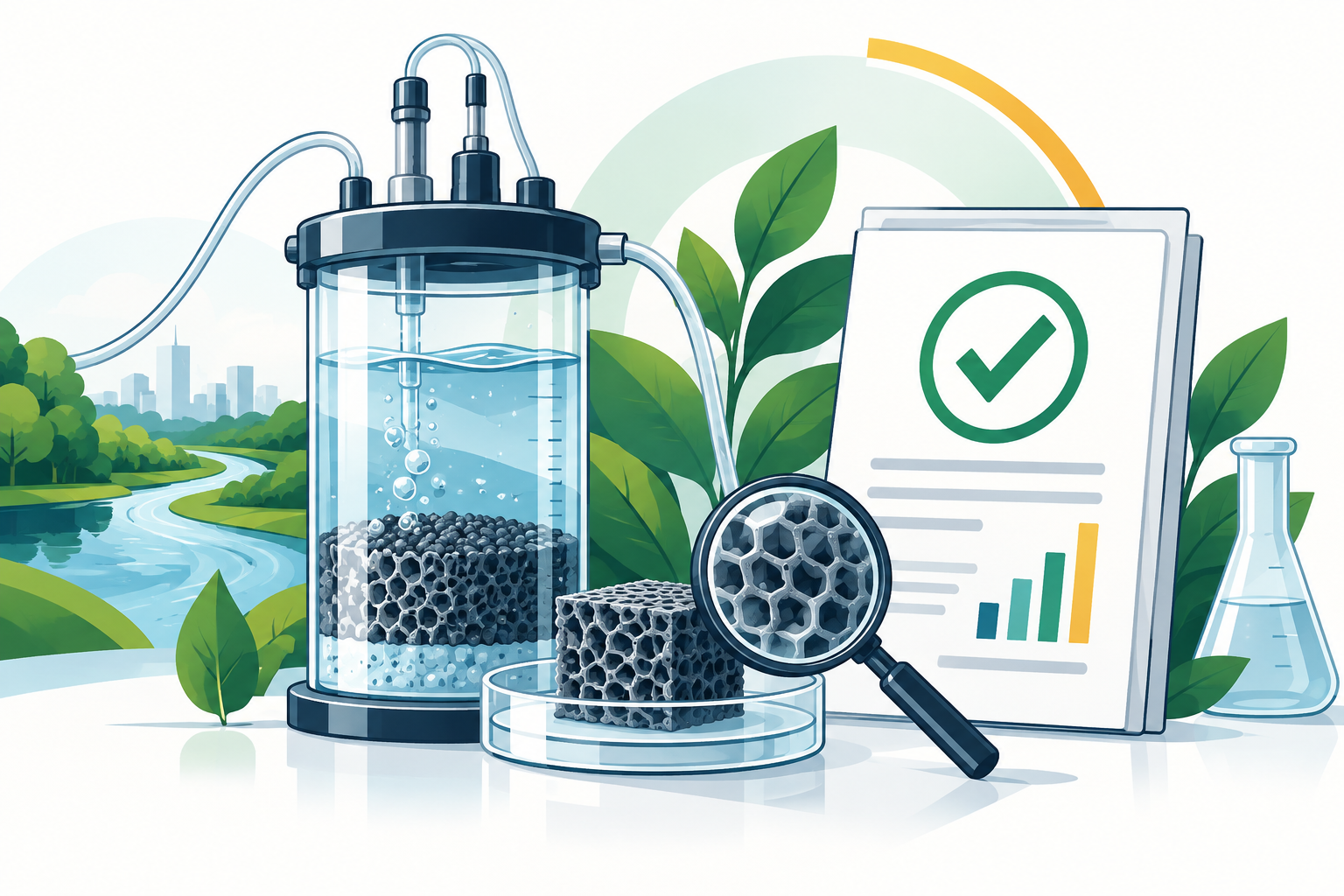
CERSUS aims to advance the circular bioeconomy through innovative materials, environmental technologies and sustainable approaches to resource recovery. Its expected results span functional materials, advanced wastewater treatment processes, improved recirculating aquaculture systems, and the valorisation of by-products from the wine-making and food industries. Life cycle-based sustainability and risk assessments will support the development of these solutions, helping identify environmental benefits, economic trade-offs and opportunities for improvement.
This section follows the project’s progress from expected results to achieved results, bringing together scientific findings, publications, methodologies, databases, functional models, prototypes and patent applications. As research progresses, it will document the outcomes generated across the work packages and the validation of materials, processes and products under laboratory and relevant operational conditions.
Beyond these direct results, CERSUS seeks to deliver outcomes through the uptake and application of research: stronger interdisciplinary collaboration, enhanced research capabilities, new skills for young researchers, and closer connections between science, industry and end-users. Shared infrastructure, training, scientific exchanges and technology transfer activities will support the use of project knowledge within and beyond the consortium.
The project’s longer-term impacts are expected to include more efficient use of water, energy and materials, reduced pollution, and greater recovery of valuable resources from waste streams. By connecting technological innovation with sustainability assessment and stakeholder engagement, CERSUS aims to contribute to a more resilient circular bioeconomy and strengthen the capacity for research and innovation in Romania and internationally.