Director of the CERSUS Centre of Excellence
Research profile
222
scientific articles
39
H-index
5300+
citations in Scopus
296
research and development projects
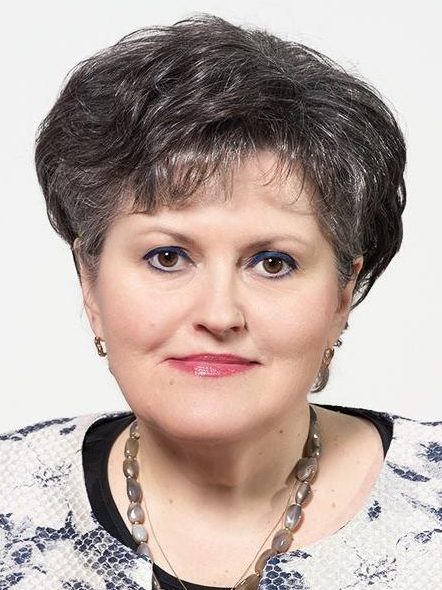
Carmen Teodosiu is Professor Emeritus at “Gheorghe Asachi” Technical University of Iași (TUIASI) and Director of CERSUS. Her career combines environmental engineering research, academic leadership and collaboration with industry, with a particular focus on sustainable water management, advanced wastewater treatment and resource recovery.
Her research connects the development and optimisation of environmental technologies with the assessment of their sustainability. Through interdisciplinary research and international cooperation, she advances solutions for water reuse, waste valorisation and pollution prevention, supporting the transition towards a circular economy and circular bioeconomy.
Prof. Teodosiu leads CERSUS in bringing together research teams working on water management, materials and waste valorisation, and the circular bioeconomy. As Director of the CERSUS Centre of Excellence, she provides scientific leadership and oversees the coordination of its eight partner institutions. She guides the shared research agenda, supports collaboration across the project’s work packages, and ensures that their results contribute to the Centre’s goals. Her role also includes mentoring young researchers and strengthening links between the consortium’s research and its practical applications.
Research and academic background
She graduated in Chemical Engineering from the Polytechnic Institute of Iași, now TUIASI, in 1981. She subsequently completed a postgraduate programme in Environmental Science and Technology in 1995 and a Master of Science in the same field in 1996, both with distinction, at the International Institute for Hydraulics and Environmental Engineering, now IHE Delft Institute for Water Education, the Netherlands.
In 1998, she obtained her PhD in Chemistry at TUIASI, with a thesis on the optimisation of advanced wastewater treatment for the removal of non-biodegradable organic pollutants and suspended solids. She became a Professor in 2002 and received the title of Professor Emeritus in 2022. She has supervised doctoral research in Chemical Engineering since 2005 and Environmental Engineering since 2009.
Her research brings together environmental engineering, water treatment and sustainability assessment. She has authored or co-authored 222 articles, including 128 papers in international ISI-ranked journals, and has contributed to 38 books and book chapters. Her work has received more than 5300 citations in Scopus.
Her principal research areas include:
- Advanced wastewater treatment and reuse: membrane processes, advanced oxidation, catalytic treatment, adsorption and biosorption for industrial and municipal effluents.
- Integrated water resources management: approaches connecting water quality, treatment, reuse and sustainable resource management.
- Waste management and resource valorisation: recovery of useful materials and resources within circular economy systems.
- Environmental and sustainability assessment: life cycle assessment, carbon and water footprints, sustainability indicators, and environmental impact and risk assessment.
- Pollution prevention and process optimisation: development, modelling and evaluation of chemical and environmental processes.
- Advanced wastewater treatment
- Water and resource recovery
- Circular economy
- Life cycle assessment
- Environmental risk assessment
- Emerging pollutants
Leading research and collaboration
Prof. Teodosiu’s experience spans nationally and internationally funded research, strategic projects and collaboration with industry. According to the CERSUS project proposal, she has been involved in 296 research and development projects, acting as project director for 159 national projects and coordinating 12 international grants on behalf of TUIASI.
This experience supports CERSUS’s collaborative approach: connecting complementary expertise across the consortium and helping translate research findings into sustainable processes, technologies and practical applications.
She is the initiator and chairperson of the International Conference on Environmental Engineering and Management (ICEEM), which reached its thirteenth edition in 2025. Her international collaborations include joint research, publications and postgraduate supervision with multiple universities across Europe and Brazil.
Her distinctions include the Doctor Honoris Causa title from the University of Pannonia, Hungary, the Anghel Saligny Prize of the Romanian Academy, and the Emilian Bratu Medal of the Romanian Chemical Society. She has also contributed to national research and academic evaluation bodies and international scientific editorial boards.
Since 2013, she has coordinated TUIASI’s Laboratory for Analysis and Control of Environmental Factors (LACMED), a RENAR-accredited laboratory connecting environmental analysis with research and services for external organisations.
Within CERSUS, she promotes a collaborative research environment in which young scientists gain access to complementary expertise, shared infrastructure and international networks, strengthening the next generation of researchers in environmental engineering and circular bioeconomy.
Training the next generation of researchers
Doctoral supervision
She has supervised 19 PhD graduates in Chemical Engineering and Environmental Engineering and, at the time of the project proposal, was guiding nine PhD students in Environmental Engineering.
Her experience includes international joint arrangements and collaborative supervision of PhD programs with universities abroad.
Research mentoring
Her mentoring includes 8 postdoctoral researchers. She has also guided undergraduate and master’s students through research projects in environmental engineering.
Role in Cersus
As CERSUS Project Director, Carmen Teodosiu leads the development of the Center of Excellence and coordinates collaboration among its eight partner institutions. Her role connects the consortium’s scientific agenda with project management, research capacity development, international cooperation and technology transfer.
Through WP1 — Project Management and Coordination, she provides overall leadership for the implementation of the research programme, bringing together complementary expertise in materials, water treatment, aquaculture, biorefinery processes and sustainability assessment.
Her expertise also supports WP6 — Sustainability Assessment, led by TUIASI, which integrates eco-design, life cycle assessment, life cycle costing and risk assessment into the evaluation of innovative materials, processes and waste valorisation pathways. This work helps the consortium assess environmental performance, economic feasibility and the implications of adopting new technologies.
Drawing on her experience in industrial collaboration and interdisciplinary research, she supports the translation of scientific findings into practical applications. Her leadership also strengthens the links between research excellence, young researcher training and the long-term development of the Center.