Senior Researcher I, Partner 7 (ECOIND) Team Leader
Research profile
74
ISI journal articles
13
H-index (Scopus)
700+
Scopus citations
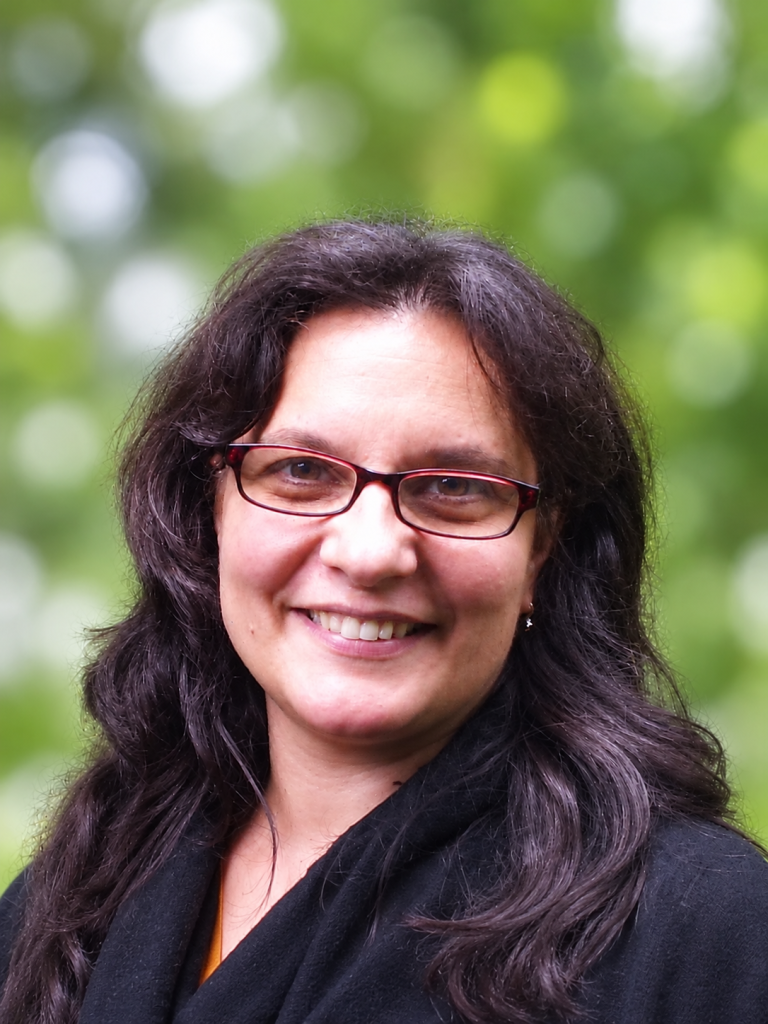
Gabriela-Geanina Vasile is a Senior Researcher I at the National Research and Development Institute for Industrial Ecology — INCD ECOIND, Bucharest, and coordinator of the Partner 7 team in CERSUS. A chemical engineer with a PhD in Chemistry, she has more than three decades of experience in environmental analytical chemistry and the control of water, soil, sediment and waste pollution.
Her research combines analytical method development and quality assurance with the investigation of toxic metal mobility, bioavailability and transfer through environmental systems. Within CERSUS, she connects this expertise with the characterisation of pollutants, the evaluation of treatment and recovery processes, and the production of reliable analytical evidence for circular water and resource management.
Research and academic background
She graduated in 1992 from the Faculty of Oil Processing Technology and Petrochemistry at the Oil and Gas Institute of Ploiești, qualifying as a Chemical Engineer. Her education combined analytical, inorganic, organic and physical chemistry with petrochemical technology, chemical process modelling and mathematical statistics.
In 2009, she obtained her PhD in Chemistry from the University of Bucharest. Her doctoral thesis investigated mobile metal species in anthropogenic soils and sediments and the traceability of analytical measurements, with particular attention to extraction methods, metal mobility and analytical method validation.
Her specialist training includes metrology in chemistry through the European Commission’s TrainMiC programme, environmental sampling training at WISMUT in Germany, and laboratory competence training covering ISO/IEC 17025:2017. More recent professional development includes Raman spectroscopy training with Horiba Scientific in France, risk management and project management training through UniSmart at the University of Padova.
Her principal research areas include:
- Environmental analytical chemistry: development and application of instrumental methods for determining contaminants in water, soils, sediments, wastes and biological matrices.
- Metal mobility and speciation: investigation of mobile metal fractions, chemical extraction procedures and the environmental behaviour of toxic elements.
- Bioaccumulation and translocation: experimental assessment of toxic metal uptake from contaminated soils and transfer into aromatic and medicinal plants.
- Water, soil and waste pollution control: analytical characterisation supporting environmental monitoring, assessment and treatment process evaluation.
- Analytical quality assurance: method validation, uncertainty budgets, statistical quality control and evaluation of laboratory performance through interlaboratory comparisons.
- Environmental analytical chemistry
- Metal speciation
- Bioaccumulation
- Pollution control
- Method validation
- Measurement uncertainty
Leading research and collaboration
Her professional career at INCD ECOIND began in June 1994. Her work in the Pollution Control of Water, Soil and Wastes Laboratory combines scientific research, project coordination, analytical method development and technical assistance to external beneficiaries.
As Vice-President of ECOIND’s Scientific Council, she contributes to institutional research strategy, researchers’ professional development and scientific performance assessment. She also serves on the institute’s Technical and Economic Council, contributing to the evaluation and monitoring of research projects.
Her project leadership encompasses research on mobile toxic metals in soils and sediments, drinking water quality, electrochemical sensors for metal detection and environmental impacts associated with poultry feeding strategies. Her recent Nucleu programme work addresses methods for the structural identification, chemical confirmation and analytical quantification of emerging anthropogenic contaminants in environmental components.
Her international experience includes leading Tuborg–B.EN.A. projects investigating the physicochemical quality of Danube Delta aquatic ecosystems and representing Romania on the Management Committee of COST Action 637 — Metals and Related Substances in Drinking Water. These activities connect analytical research with water quality monitoring and international scientific cooperation.
As scientific administrator of the ECOLIB Institutional Repository, she contributes to the organisation, curation and accessibility of research outputs and researcher profiles. She also served as Managing Editor of the Romanian Journal of Ecology & Environmental Chemistry from 2020 to August 2026. Since November 2024, she has been President of the Bucharest 4 branch of the Romanian Society of Chemistry and a member of its Executive Committee.
Training and knowledge exchange
A certified trainer since 2017, she combines scientific expertise with practical experience in preparing, delivering and evaluating training activities. Her laboratory training covers metal determination in environmental matrices using atomic absorption, inductively coupled plasma optical emission and atomic fluorescence techniques, alongside procedures for ensuring the quality of analytical results.
She provides scientific and technical assistance to beneficiaries implementing analytical methods in industrial and treatment plant laboratories. Her experience includes training within the Leonardo da Vinci programme on environmental pollution control and guidance for laboratory researchers in instrumental analysis and analytical quality assurance.
Her contribution to researcher development also includes support through ECOIND’s Scientific Council and the dissemination of knowledge through publications, scientific events and open-access research infrastructure. These activities connect practical laboratory competencies with research communication and access to scientific information.
Within CERSUS, this experience supports knowledge exchange on environmental sampling, contaminant determination, method validation and interpretation of analytical results. Collaboration across partner institutions helps young researchers connect chemical measurements with treatment performance, resource recovery and biological effects.
Role in CERSUS
As coordinator of the Partner 7 team, Gabriela-Geanina Vasile leads INCD ECOIND’s contribution to the CERSUS research programme. Her role brings together the institute’s complementary expertise in environmental analytical chemistry, pollution control, treatment technologies and ecotoxicology.
Her scientific expertise supports the characterisation of environmental samples and the determination of contaminants, including the assessment of metal mobility and transfer. Her experience in method validation, uncertainty evaluation and analytical quality control provides a foundation for generating reliable data across the project’s experimental activities.
Within WP3, ECOIND leads the task on integrated innovative processes for nutrient recovery from wastewater for agricultural use. Working with the consortium partners, this activity connects advanced treatment and separation approaches with the recovery of useful resources and circular water management.
Through team coordination, shared analytical infrastructure and knowledge exchange, she supports the evaluation of innovative materials, environmental processes and resource valorisation pathways. Her contribution helps connect laboratory measurements with the evidence needed to assess treatment effectiveness and environmental performance.